
LightCarbon LCR020-D (2027): Specs, Geometry and Who It’s For
By Jeremy Lucas

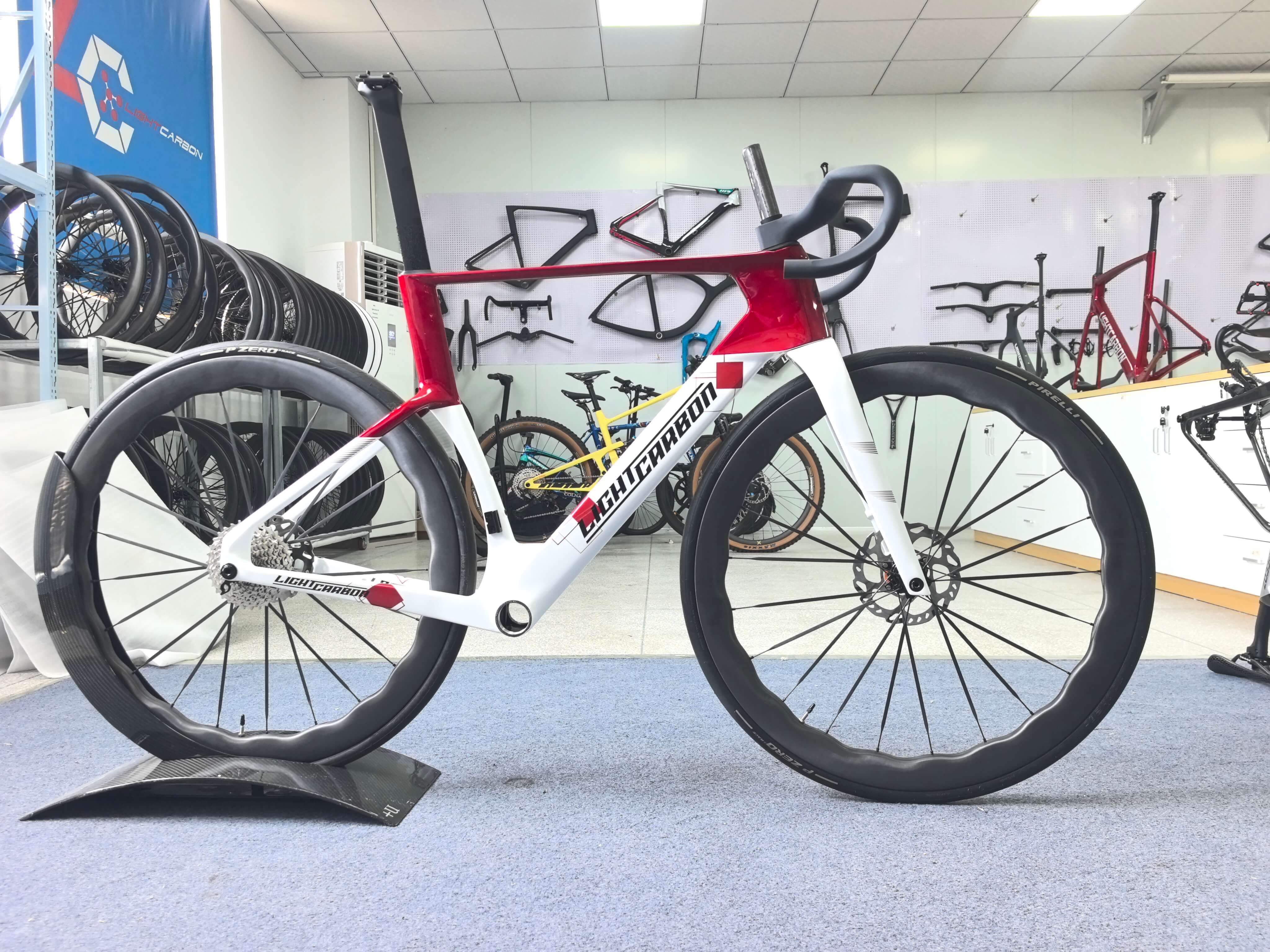
The short answer: The LightCarbon LCR020-D is the 2027 aero race frameset with an integrated bar and stem, built from T800, T1100 and M40J carbon, with a claimed 1,100 g frame in size 54, room for 35 mm tires, a threaded T47 bottom bracket and a UDH hanger. It's coming to 168Velo for $1,299.99. If you race, or ride like you do, it's the frame I'd look at first.
I've raced on a LightCarbon frame for about 15,000 miles and went from Cat 4 to Cat 2 on it. When I picked which frames to bring in, the LCR020-D was the obvious race bike. Here's everything I know about it, and who I think should skip it.
What the LCR020-D Is
LightCarbon calls the LCR020-D its "Super Aero Race" road frame. It's their newest disc-brake aero platform, with a one-piece integrated cockpit and fully hidden cables. Think of it in the same family as the bikes you see at the front of a crit or a fast group ride: deep tube shapes, a low front end, and geometry that puts you in a racing position without being a contortion act.
Key Specs
| Carbon | Toray T800, T1100 and M40J |
| Frame weight | 1,100 g, size 54 (±4%, LightCarbon claim) |
| Sizes | 49, 52, 54, 56, 58 |
| Max tire | 700x35C |
| Bottom bracket | Threaded T47, 85.5 mm |
| Axles | 12x100 front, 12x142 rear |
| Brakes | Flat mount, 160 mm rotors |
| Hanger | UDH |
| Cockpit | Integrated bar/stem, 360–420 mm wide, 80–130 mm stems |
| Price at 168Velo | $1,299.99 (coming soon) |
The Details That Matter
Threaded T47 bottom bracket
This is my favorite spec on the bike. Press-fit bottom brackets were the source of a lot of creaking frames over the last decade. T47 is threaded, so the bearings screw into the frame. Fewer creaks, easier service, and you can run a wide range of cranksets with the right T47 bottom bracket.
UDH derailleur hanger
UDH is SRAM's Universal Derailleur Hanger standard. It matters for two reasons. First, it's the only way to run SRAM's Transmission-style direct-mount derailleurs. Second, replacement hangers are easy to find, which is not something you could say about most Chinese frames a few years ago.
35 mm tire clearance
Most aero race frames used to top out at 28 or 30 mm. The LCR020-D clears 35 mm. That gives you room for fast 28–30 mm tires with plenty of margin, or something bigger for rough roads and winter riding.
Integrated cockpit
The bar and stem are one piece, with cables running inside the bar, through the stem, and into the frame. It looks clean and it's faster in the wind. The trade-off: fit changes mean swapping the whole cockpit, so get your bar width and stem length right before you build. LightCarbon offers widths from 360 to 420 mm and stems from 80 to 130 mm, which covers most riders.
Frame-specific seatpost
The seatpost is an aero shape with its own clamp. It comes with the frame. Keep in mind you can't swap in a round seatpost from your parts bin, so measure your saddle height before cutting anything.
Geometry: Racy but Livable
| Size | 49 | 52 | 54 | 56 | 58 |
|---|---|---|---|---|---|
| Stack | 511 | 527 | 544 | 568 | 589 |
| Reach | 375 | 380 | 385 | 395 | 400 |
| Head tube angle | 71° | 72° | 72.5° | 73° | 73.3° |
| Seat tube angle | 74.5° | 74° | 73.6° | 73.3° | 73° |
| Wheelbase | 993.7 | 990.7 | 986 | 999 | 1008.6 |
All sizes: 410 mm chainstays, 70 mm BB drop, 45 mm rake. Measurements in mm, from LightCarbon's 2026–2027 catalog.
A size 54 at 544 mm stack and 385 mm reach is right in the range of modern performance road bikes. It's aggressive enough to race but not so low that you need to be a 22-year-old with a yoga habit. Short 410 mm chainstays keep the rear end snappy when you stand up and sprint.
If you're between sizes, read the LightCarbon sizing guide. Stack and reach will tell you much more than the size number.
How It Compares on Price
| Frameset | MSRP (Oct 2026) |
|---|---|
| LightCarbon LCR020-D at 168Velo, with integrated cockpit | $1,299.99 |
| Scott Foil RC Pro HMX | $3,499 |
| Specialized Tarmac SL8 (10r) | $3,500 |
| Specialized S-Works Tarmac SL8 | $5,700 |
What's included varies by brand, and prices change, so check before you buy. But even allowing for that, the gap is huge. Most of it pays for marketing, pro team sponsorships, distributor and dealer margins, and big salaried teams in the U.S. and Europe. I went through it line by line in LCR020-D vs. S-Works Tarmac SL8.
Who Should Buy the LCR020-D
- Road racers and crit riders who want an aero race bike without a $5,000+ frameset bill.
- Fast group ride regulars who'd rather spend the savings on wheels, a power meter or a race season.
- Riders building a second race bike so the expensive one stays out of crashes.
- Anyone moving to SRAM Transmission or a modern groupset who wants T47 and UDH.
Who Should Skip It
- Gravel and adventure riders. 35 mm is plenty for rough roads, but not for real gravel. Look at the LCG072-D instead.
- Riders who change fit often. An integrated cockpit is great once your fit is dialed. If you're still experimenting, it gets expensive.
- Weight weenies. 1,100 g is respectable for an aero frame, but it's not trying to be a climbing bike.
- Anyone who needs a recognizable logo. Nobody on your group ride will know what it is. In my experience, dropping them on it is more fun anyway.
What You Get Buying From 168Velo
- LightCarbon's 2-year warranty, plus an extra year from us.
- A 25% crash replacement discount.
- 30-day returns on unbuilt framesets.
- No tariff bill at your door. Frames from China now carry about 41% in U.S. duties, and our price includes them. Here's the full tariff breakdown.
- Someone who races LightCarbon answering your questions.
Bottom Line
The LCR020-D has the specs I'd want on a race bike in 2026: T47, UDH, 35 mm clearance, a clean integrated cockpit and real testing behind it. At $1,299.99 with an extra warranty year, it's hard to argue with.
Want one from the first batch? Send a request with your size, or text (801) 821-6846. See the full LCR020-D product page for specs and box contents.
0 comments