
LightCarbon LCR020-D vs. S-Works Tarmac SL8: $1,299 or $5,700?
By Jeremy Lucas

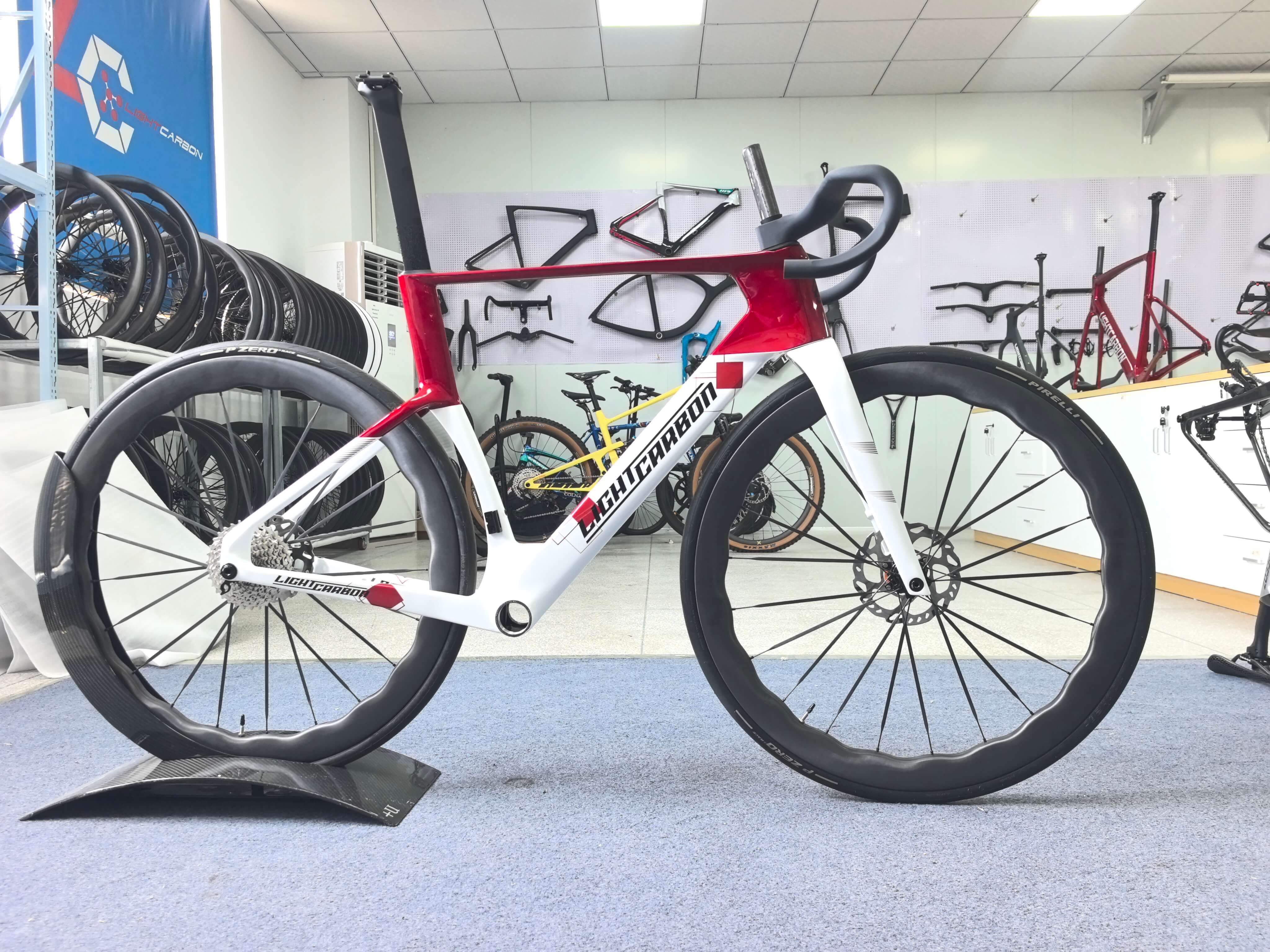
The short answer: An S-Works Tarmac SL8 frameset costs $5,700. A LightCarbon LCR020-D frameset with an integrated cockpit is coming to 168Velo for $1,299.99. The Tarmac is lighter, backed by a huge dealer network, and holds its resale value better. The LightCarbon has the modern race specs that matter (T47, UDH, 35 mm clearance, integrated cockpit) for about a quarter of the price. If you race on your own dime, the $4,400 difference buys a lot of wheels, race entries and training.
I've ridden Specialized, Ventum, Blue, BH and Scott, and I race on LightCarbon. In a blind test, I don't think I could pick them apart. That doesn't mean they're identical. Here's an honest comparison.
The Price Gap
| Frameset | MSRP (Oct 2026) |
|---|---|
| LightCarbon LCR020-D at 168Velo, with integrated bar/stem | $1,299.99 |
| Scott Foil RC Pro HMX | $3,499 |
| Specialized Tarmac SL8 (10r) | $3,500 |
| Specialized S-Works Tarmac SL8 | $5,700 |
What's included varies by brand, and prices change. Check before you buy.
What the Extra $4,400 Pays For
You're not just paying for carbon. A big brand's frame price covers:
- Marketing and pro team sponsorships. WorldTour teams, ads, athletes and events are expensive.
- Distributor and dealer margins. The bike passes through several companies before it reaches you, and each needs to make money.
- Large salaried teams in the U.S. and Europe. Design, product, marketing and support staff in high-cost countries.
- R&D and after-sales support. Wind tunnels, test labs, warranty departments and a dealer network to handle claims in person.
Some of that is real value, especially R&D and support. Plenty of Western frames are built in Asia anyway. The badge often changes who designed and supports the frame more than where it was made.
Spec Comparison
| LightCarbon LCR020-D | What you'd expect from a top-tier big-brand race frame | |
|---|---|---|
| Bottom bracket | Threaded T47 | Threaded BSA or T47 on most current race frames |
| Derailleur hanger | UDH | UDH or brand-specific |
| Tire clearance | 35 mm | Around 32 mm on most current race frames |
| Cockpit | Integrated bar/stem included | Integrated cockpit often sold separately or included at higher tiers |
| Frame weight | 1,100 g (size 54, claimed) | Lighter at the top tier, often well under 800 g |
| Testing | ISO 4210 | ISO 4210 plus extensive in-house testing |
| Warranty | 2 years from LightCarbon + 1 year from 168Velo, 25% crash replacement | Often lifetime on frames for the original owner, with crash replacement programs |
What You Actually Give Up
The last few hundred grams
The lightest frames on the market still wear Western badges. If you're chasing a 6.8 kg climbing bike, a top-tier big-brand frame will get you there more easily. For crits, flats and most road races, a few hundred grams won't decide anything. Fitness, positioning and tactics will.
A long warranty and a dealer down the street
Big brands often offer lifetime frame warranties, and you can walk into a dealer with a problem. That's a real advantage. LightCarbon gives 2 years, and we add a third, plus a 25% crash discount. Buying direct from China, warranty claims mean time zones, language barriers and international shipping on every claim. That's the part 168Velo exists to fix.
Resale value
A used Tarmac is easier to sell. Then again, the used bike market has been rough for everyone lately. If you ride your bikes for years like I do, resale matters a lot less.
Group ride status
Nobody will recognize the name. Dropping the group on a bike they've never heard of is more fun anyway.
What You Don't Give Up
- Modern standards. T47, UDH, 12 mm thru-axles, flat-mount 160 mm rotors.
- Clearance. 35 mm is generous for an aero race frame.
- Clean integration. Hidden cables and a one-piece cockpit.
- Race capability. I went from Cat 4 to Cat 2 on a LightCarbon frame. It was never the thing holding me back.
What $4,400 Buys Instead
Here's how I'd think about the difference:
- A good set of carbon race wheels.
- A power meter.
- A full season of race entries and travel.
- A professional bike fit, a coaching plan, and new tires and chains all year.
- A second bike for training, so your race bike stays fresh.
Every one of those will make you faster than the difference between two well-built aero frames.
The One Rule: Never Buy a Knockoff
If you see an "S-Works SL8" frame for $600, it's fake. Counterfeits copy the mold, not the carbon layup, and the layup is what keeps you safe. A real Chinese brand like LightCarbon sells its own designs under its own name, with testing and a warranty. Here's how to tell them apart: open mold vs. brand vs. counterfeit.
Before you buy any frame, check for:
- Years in the market
- A warranty you can actually read
- Regular product testing
- Straight answers on safety parts
Who Should Buy Which
Buy the S-Works Tarmac SL8 if
- You want the lightest race bike you can buy, and price isn't a factor.
- You want a lifetime warranty and a dealer you can walk into.
- You upgrade often and care about resale.
- The brand matters to you. That's a fair reason. Just know what you're paying for.
Buy the LightCarbon LCR020-D if
- You race or ride fast and pay for it yourself.
- You'd rather spend the difference on wheels, power, coaching or racing.
- You want modern standards and an integrated cockpit without a $5,700 bill.
- You want U.S. warranty support without dealing with an overseas factory.
Bottom Line
The S-Works Tarmac SL8 is an excellent bike. So is the LCR020-D, at about a quarter of the price. Unless you need the last few hundred grams or the logo, I'd put the difference into the things that actually make you faster.
Want one from the first batch? Send a request or text (801) 821-6846. Full specs and geometry are in the LCR020-D deep dive.
0 comments