
Magicshine EVO 1700 UT vs. EVO 1700 PRO: Which Should You Buy?
By Jeremy Lucas

The short answer: Get the EVO 1700 PRO ($85.45) if you want a great road light with the wireless remote included. Get the EVO 1700 UT ($107.95) if you ride long nights, want ANT+ or Shimano Di2 control, or want a light that's harder to steal. Both put out 1,700 lumens with a cut-off beam that won't blind oncoming traffic.
On paper, these two lights look almost identical. They aren't. Here's how they actually differ and who each one is for.
EVO 1700 UT vs. EVO 1700 PRO: Side by Side
| EVO 1700 PRO | EVO 1700 UT | |
|---|---|---|
| Price at 168Velo | $85.45 | $107.95 |
| Max output | 1,700 lumens | 1,700 lumens |
| Beam distance | 205 m | 206 m |
| Max runtime | Up to 14 hours | Up to 17 hours |
| Battery | 4,400 mAh | 5,200 mAh (dual 18500 cells) |
| Charging | USB-C, about 3 hours | USB-C |
| Wireless remote | Included (MJ-6558) | Compatible, sold separately |
| ANT+ / Di2 control | No | Yes |
| FTR LightSync | Yes | Yes |
| Mount | Magnetic MagicLock | MagicLock quick release with anti-theft |
| App control | No | Yes |
| Water resistance | IPX6 | IPX6 |
| Weight | 165 g | 175 g |
What They Have in Common
Start with what's the same, because it's most of what matters.
1,700 lumens with a real cut-off beam
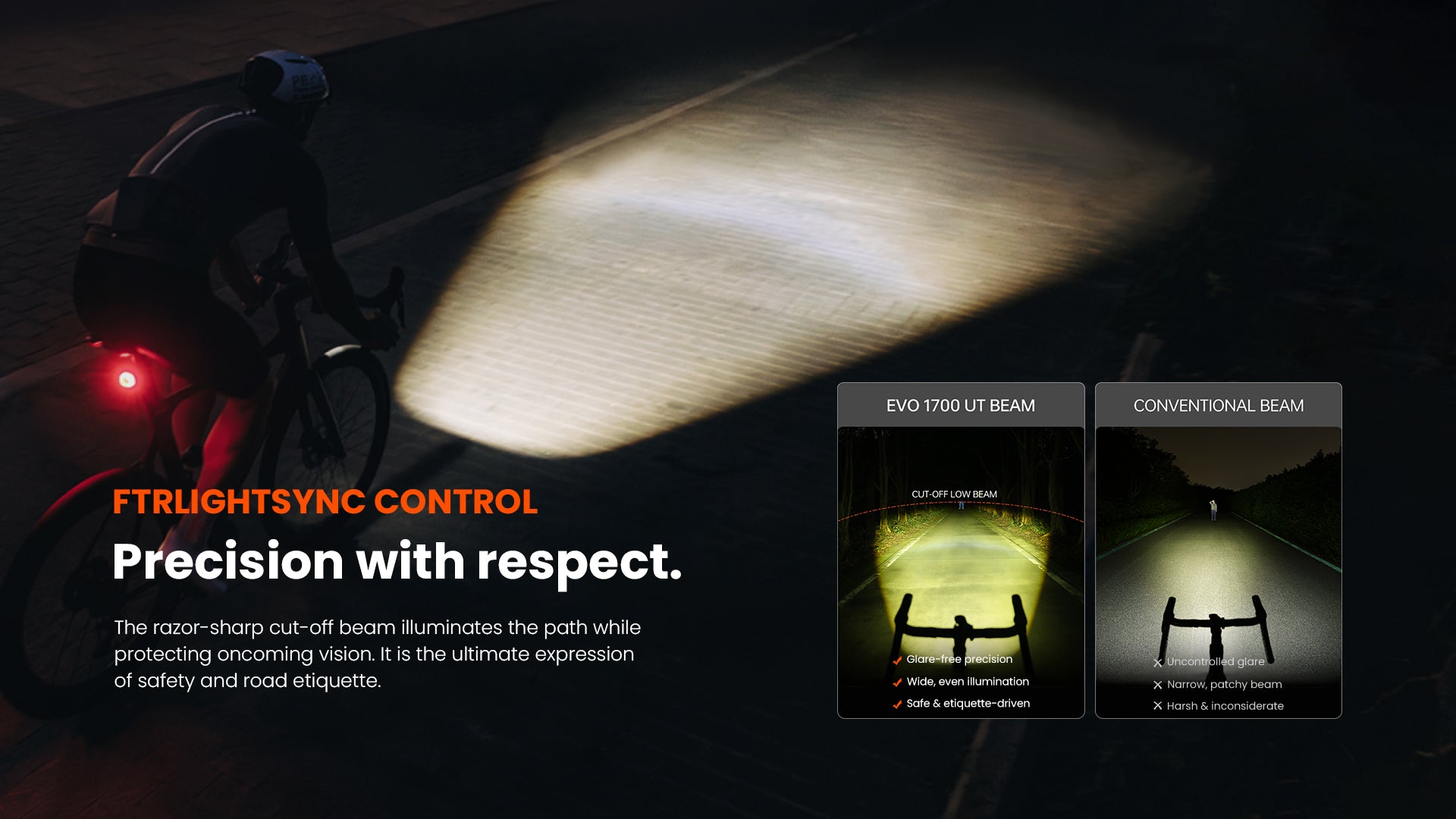
Both lights use a shaped beam with a flat top edge, the same idea as a car's low beams. The light goes on the road, not into the eyes of the driver or rider coming the other way. Lots of cheap lights claim huge lumen numbers but throw a round flashlight beam that blinds everyone. On a dark canyon road with traffic, the cut-off beam is the feature I'd pay for first. If you want to know how many lumens you actually need, I broke it down in how many lumens do you need on a bike light?
Under-mount design
The EVO series mounts under an out-front computer mount, with Garmin and Wahoo adapters included. Your bars stay clean, the light sits low where it lights the road better, and your computer stays where you can see it. According to road.cc, the EVO 1700 was Magicshine's first under-mounted light.
FTR LightSync
Both lights work with Magicshine's FTR LightSync system, so compatible Magicshine front and rear lights can be controlled together.
IPX6 and a 2-year warranty
Both are rated IPX6, meaning they handle heavy rain and road spray. Both carry Magicshine's 2-year warranty, plus 6 months if you register the light.
Where the EVO 1700 UT Wins
Runtime
The UT runs dual 18500 cells totaling 5,200 mAh, for up to 17 hours at its lowest setting compared to 14 hours on the PRO. If you commute in winter and charge once a week, or ride 200K brevets and overnight events, those extra hours matter.
ANT+ and Shimano Di2
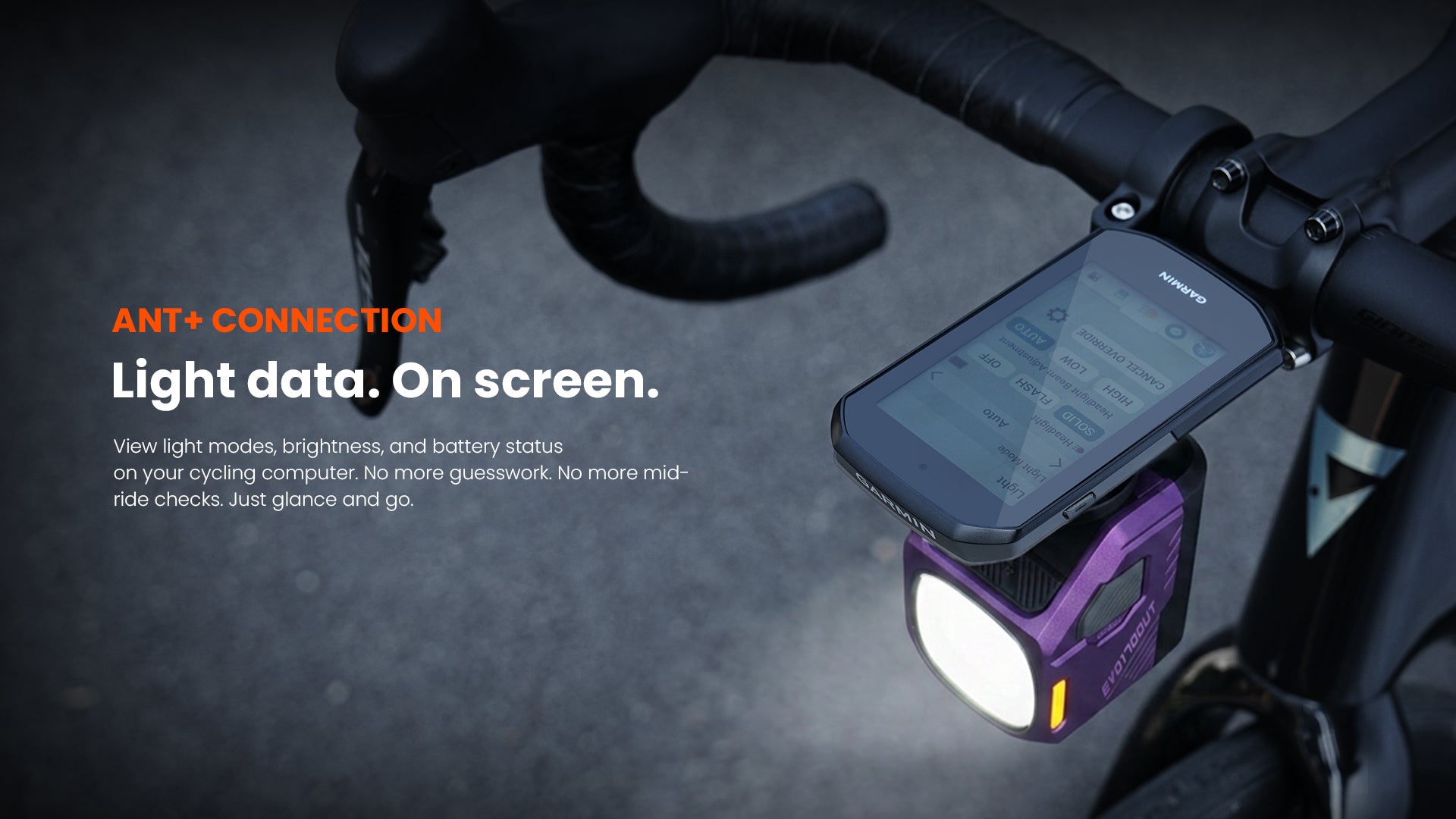
This is the big one. The UT connects over ANT+, so you can see battery level and change modes from a compatible bike computer. It also works with Shimano Di2, so you can switch modes from your shifter hoods. Once you've changed light modes without taking a hand off the bar on a fast descent, it's hard to go back.
Anti-theft mount
The UT's MagicLock quick release has an anti-theft design. If you lock your bike outside a coffee shop or at work, the UT is a lot less tempting to walk off with.
App, mode memory and smart lockout
The UT pairs with Magicshine's app for custom modes. It remembers the last mode you used, and has a lockout so it doesn't turn on in your bag and arrive dead.
Where the EVO 1700 PRO Wins
Price, with the remote included
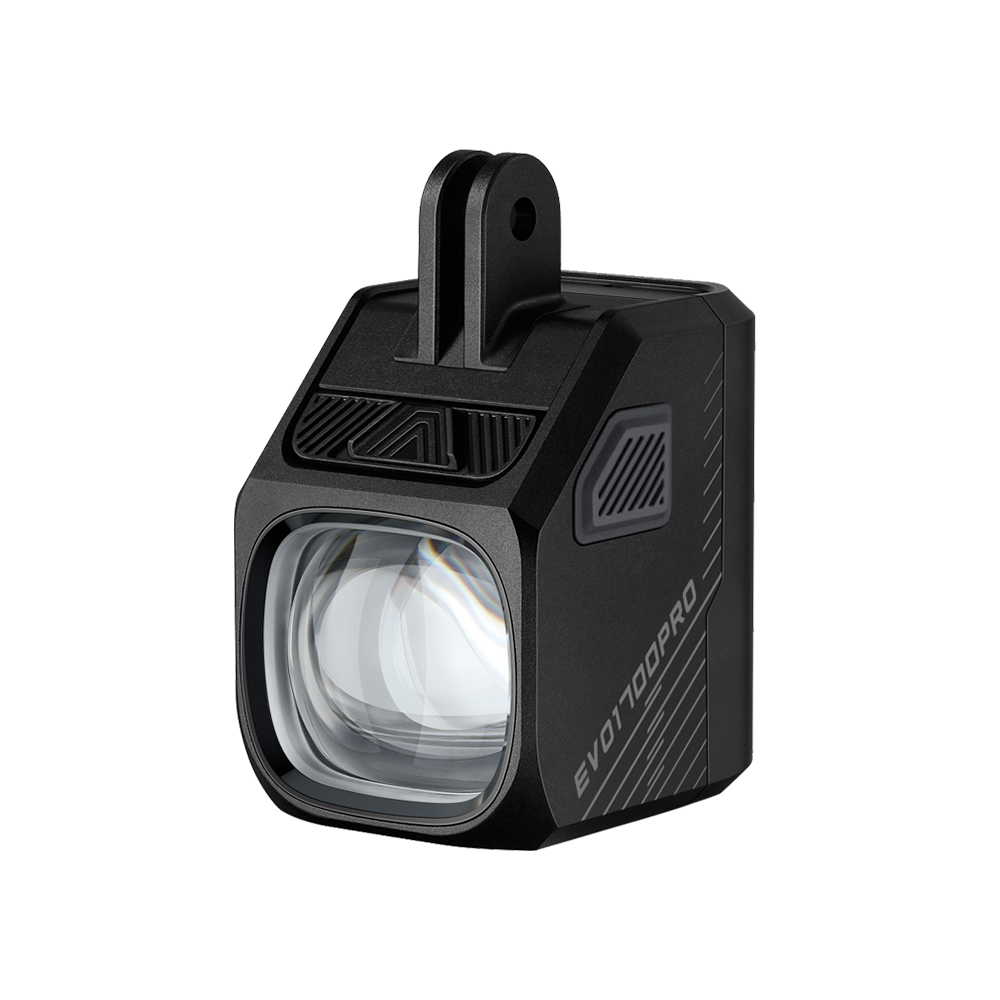
The PRO is $22.50 less, and the MJ-6558 wireless remote comes in the box. With the UT, the remote is a separate purchase. If you don't use ANT+ or Di2, the PRO gives you bar-mounted control for less money.
Magnetic mount
The PRO's magnetic MagicLock mount snaps on and off with one hand. It's the fastest mount I've used. For riders who pull the light every time they park, that's a real quality-of-life feature.
Weight
165 g vs. 175 g. Ten grams won't make you faster, but it's there.
Which One Should You Buy?
Get the EVO 1700 PRO if:
- You mostly do evening rides, early mornings, or a commute under an hour or two.
- You don't have Di2 or don't care about controlling your light from your computer.
- You want the wireless remote without paying extra.
- You take your light off every time you park.
Get the EVO 1700 UT if:
- You ride long: ultra events, brevets, all-night rides, long winter commutes.
- You run Shimano Di2 or a computer that supports ANT+ lights.
- You leave your bike locked in public.
- You like customizing modes in an app.
Still not sure?
For most road riders, I'd start with the PRO. It's the better value, and nothing about it feels like a compromise on a normal ride. If you already know you'll ride through the night, or you're a Di2 rider who wants everything tied together, the UT is worth the extra money.
What About Runtime at Full Power?
Be careful with any bike light's maximum runtime number. Those figures are measured at the lowest setting. At full 1,700 lumens, every light in this class runs much shorter. In real riding, most people run a mid setting on open roads and bump to high on fast descents, so actual runtime lands somewhere in between. That's another reason the UT's bigger battery matters for long rides.
Pair It With a Taillight
A great headlight is half the setup. I run the SEEMEE 300 on the back, day and night, because it gets attention from drivers and flashes brighter when you brake. More on why in daytime running lights for cyclists.
Bottom Line
Same brightness, same beam, same build quality. The PRO is the better deal for most riders. The UT is the better tool for long-distance and Di2 riders. Neither is a bad choice.
Want help deciding? Text (801) 821-6846 or email support@168velo.com with how and where you ride, and I'll tell you which one I'd buy. You can also see the full lineup on our Magicshine USA page.
0 comments